The Daily Bark from Milo.com |

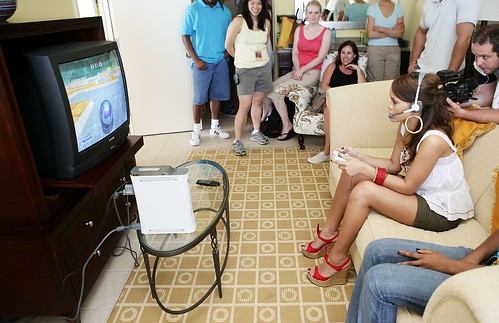
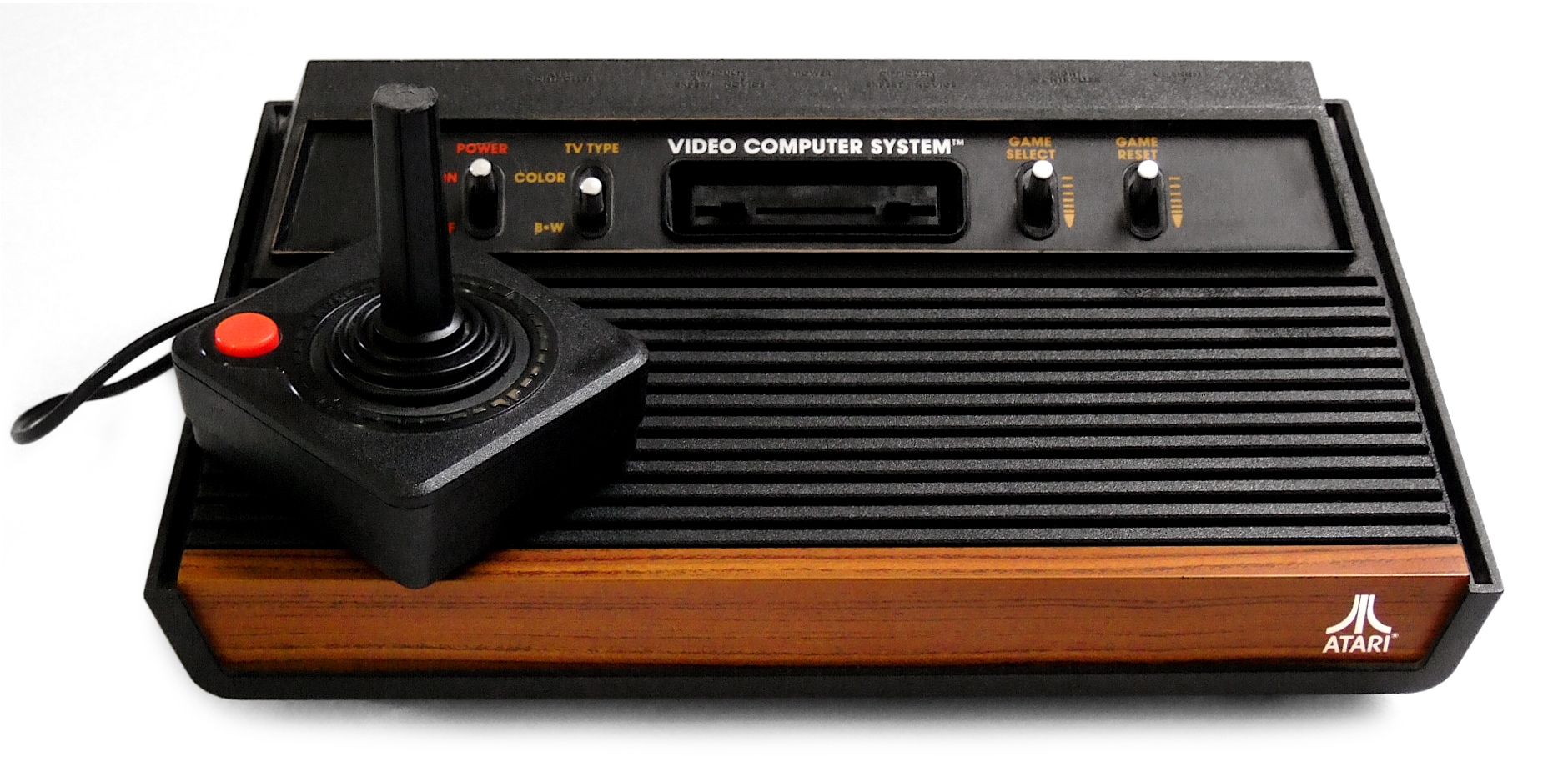
| Posted: 23 Dec 2010 12:34 PM PST The old platforms of ’80s video games have given rise to today’s Nintendo Wii’s, Playstation 3’s and Xbox 360’s. But what exactly has changed? For one thing, the development of a game from drawing board to release date has undergone dramatic transformation. Today, games come with intense story lines, online multi-player capabilities, Facebook connectivity, and wireless controllers that interact with motion sensors located atop 52′ plasma televisions. But the pushing of boundaries in both technology and creativity is nothing new. In fact, it’s been happening since the 1985 release of the Nintendo NES 8-bit console. For a look at what else has (and hasn’t) changed, take a look at video game consoles, “Then and Now.” Nintendo Track and Field vs. Nintendo WiiWith its simple game play, 1988’s Nintendo Track and Field was the launching point for other quick, repeating, button-pressing games. The controller was a simple mat on the ground, with only three buttons. Two for running, and one for action—which makes for generic game play by today’s standards. The Wii Fit is a world apart. Introduced to the U.S. in May of 2008, the Wii Fit uses a unique platform peripheral called the Wii Balance Board, which the player stands on during game play. Instead of just standing in place, the Wii Fit allows the player to do yoga, aerobics, strength training, and balance games. The Wii Fit even has real world application, as it’s been used to help physical therapy patients and those in nursing homes. It’s a far cry from running in place, to say the least. Nintendo Zapper vs. Wii ZapperThe NES Zapper was an electric light gun accessory that launched alongside the NES in North America in October 1985. The Zapper resembled a futuristic ray gun and was pointed at the screen to shoot objects. One of the most popular objects were ducks, from NES Duck Hunt. While it provided hours of entertainment, the gun was a rudimentary and inaccurate device, that worked best when pressed against the glass of one’s 1980s tube-based television. The high-tech Zapper is—believe it or not—only the second installment of a Nintendo-built gun accessory and was first released for the Wii on November 19, 2007. Instead of just pointing at the screen, the Wii version utilizes the Nunchuk add-on and provides a three-axis accelerometer for motion-sensing and tilting. This allows for 360˚ gameplay, and tons of dead bad guys. Joysticks vs. Wireless ControllersThe Joystick used to be the international symbol for video games. During the ’80s, digital joysticks were the most popular, and most-used with all game consoles. Still, looking back on it, it’s easy to see that the old Atari model joysticks allowed for minimal movement, usually only left-to-right and up-to-down. It was amazing what you could do without ever going diagonal. The modern, wireless remote control is designed exclusively for gaming and became available with the release of the Xbox 360 in November 2005. Technically, wireless remotes belong to what is considered by many the ’seventh generation of gaming consoles’ (those released since 2005). The wireless remote gives players the ability to interact with the console from anywhere within signal distance, meaning you could play on your Xbox from the kitchen, or even the bathroom if that’s the way you like it. Nintendo Game Boy vs. Nintendo DSThe Game Boy was an 8-bit handheld video game player developed and manufactured by Nintendo. It was released in North America in July 1989 to the joy of many kids who before had to interact with their parents while on road trips. While it didn’t come in color and wasn’t as fancy as its competitors at the time (i.e. Turbo Graphix 16 or Game Gear), the Game Boy was by far the most popular mobile gaming console, probably due to its affordability. The Nintendo DSi is the newest form of portable gaming. Released in 2009, the Nintendo DSi can do a ridiculous amount more than its Game Boy predecessor, including give kids the ability to play games, listen to music, take pictures, and connect to the Internet. Plus, you get all that without having to turn the machine off and reboot every time you want to play another game. Nintendo NES vs. Xbox 360The Nintendo NES was the bestselling video game console of its time and helped to revitalize a dying industry. The graphics were bad and the controls were limiting, but the games led to some of the most entertaining wastes of summer days ever imagined. Generations of kids remember the significance the Nintendo NES had on their childhood. The Xbox 360, however, allows for numerous types of interaction between user and gaming system. For instance, users are able to connect online and compete with other users around the world or down the street using Xbox Live. There’s an online marketplace where people can buy and download games straight to their console and Xbox 360 even offers third-party streaming services from Netflix and ESPN. In short, it’s the ultimate home gaming and entertainment machine. Atari 2600 vs. iPod TouchThe Atari 2600 was released in October 1977 and popularized the use of the microprocessor-based hardware and cartridges containing game code. During the ’80s, “Atari” was the synonym for video games in general, with the bestselling game of Pac-Man. But the iPod Touch is leaps and bounds beyond the Atari. Gone are joysticks and game cartridges—this portable media player, digital personal assistant and Wi-Fi mobile platform all-in-one fits in your pocket and does so much more than ever before. The 4th generation iPod Touch features Apple’s Retina display and two cameras—one front-facing for FaceTime, photos and HD video recording and one rear-facing for photos and HD video recording. It also allows you to play games, watch movies, record your own videos, and chat with friends face-to-face. The the 4th generation iPod also comes in astonishing 8GB, 32GB and 64GB memory models, which is significantly more memory than the entire Atari 2600 console. Nintendo Robot vs. DJ HeroThe R.O.B. (Robotic Operating Buddy) was an accessory for the NES and released in 1985. The controller only worked with two games in the NES “Robot Series,” Gyromite and Stack-Up. The R.O.B. received orders via optical flashes on the screen and, once it lit up, it was ready to receive commands and play. Since it couldn’t do much, the R.O.B. was actually released as a novelty, in order to alleviate retail fears after the video game crash of 1983. DJ Hero is a spin-off from the classic Guitar Hero franchise. Released in October of 2009 in the U.S., the game allows players to score points by pressing buttons to activate beats, adjust crossfade and “scratch” the turntable on the game’s custom controller. Big name DJ’s, such as DJ Shadow, DJ AM, and Daft Punk, have either contributed music to the game or even allowed the game’s creators to use their images for playable avatars. Unlike the R.O.B., which was more for show, the DJ Hero controller allows you to have the time of your life mixing music and trying to get the crowd popping like your favorite real life DJ’s. Nintendo Power Glove vs. Xbox 360 Chat PadThe Power Glove was released in 1989 as an accessory for the Nintendo NES, and was one of the first controllers to recreate human hand movements on a television screen in real-time. The Power Glove was not popular among the public, however, as users found its controls difficult to use. Hence, the games designed specifically for it did poorly, though it was particularly fun to use with Mike Tyson’s Punch Out. But while the Power Glove was a commercial flop as an add-on accessory, it looked pretty cool and hardcore when it was on your hand. The Xbox 360 Chatpad is a small keyboard accessory that was released with Xbox Windows Live and included a wired headset. The Chatpad allows you to text chat with your friends while you’re playing on Xbox Live—you can even connect with buddies on Facebook and follow what’s happening on Twitter as fast as your fingers can fly. That’s a lot more than can be said of the Power Glove. Essentially, it’s devices like these that make a future with Cyborgs that much more believable. |


| You are subscribed to email updates from The Daily Bark To stop receiving these emails, you may unsubscribe now. | Email delivery powered by Google |
| Google Inc., 20 West Kinzie, Chicago IL USA 60610 | |






Tidak ada komentar:
Posting Komentar